Watch Strap Buckles Guide: Types, Sizes, Materials & Compatibility
The buckle is the unsung hero of your watch strap. It secures your watch to your wrist, contributes to comfort, and adds a finishing touch to the overall aesthetic. Whether you’re replacing a worn buckle, upgrading to a better material, or building a custom strap, this guide covers everything you need to know about watch strap buckles.
🔧 Upgrading your buckle? We carry a wide selection of watch buckles — from classic tang buckles to premium deployant clasps. Available in stainless steel, gold, titanium, and more.
Introduction
A watch buckle might seem like a simple component, but it plays a crucial role in comfort, security, and style. The right buckle can transform how a strap feels and looks, while the wrong one can make a beautiful watch uncomfortable or even unsafe.
In this guide, you’ll learn:
- The different types of watch buckles and clasps
- How to measure buckle width correctly
- Buckle materials and their durability
- Compatibility between buckles and straps
- How to choose the right buckle for your watch and lifestyle
- Common issues and maintenance tips
Types of Watch Buckles & Clasps
1. Tang Buckle (Standard Pin Buckle)
The classic buckle found on most leather, NATO, and rubber straps. Simple, reliable, and widely available.
| Feature | Detail |
|---|---|
| Pros | Simple, reliable, affordable, easy to replace |
| Cons | Wears strap holes over time, can be less comfortable than deployant clasps |
| Best For | Everyday wear, vintage-style watches, NATO straps |
2. Deployant Clasp / Folding Clasp
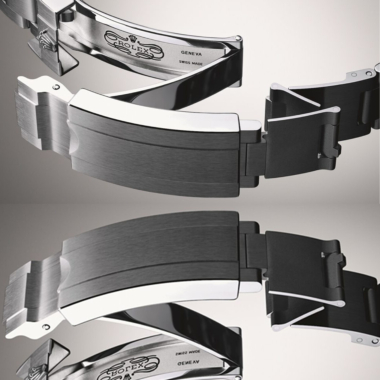
A two-piece folding clasp that opens and closes like a bracelet clasp. It reduces wear on the strap and offers a cleaner look.
| Feature | Detail |
|---|---|
| Pros | No strap hole wear, easier to put on/take off, premium look |
| Cons | More expensive, requires correct strap length, can add bulk |
| Best For | Dress watches, leather straps, daily wear where convenience matters |
3. Butterfly Deployant Clasp
A variation of the deployant clasp that opens symmetrically from both sides, like butterfly wings. Often found on high-end leather straps.
| Feature | Detail |
|---|---|
| Pros | Sleek, symmetrical, very secure, premium appearance |
| Cons | Requires precise strap length, can be bulky on smaller wrists |
| Best For | Luxury dress watches, high-end leather straps |
4. Single-Fold Deployant Clasp
A simpler version of the deployant clasp that folds once. Often found on OEM straps from brands like Omega and TAG Heuer.
5. Dive Extension Clasp
A clasp with an extension mechanism that allows the bracelet or strap to be lengthened over a wetsuit. Common on dive watches.
- Ratchet extension: Tool-less adjustment in small increments
- Flip-lock extension: Simple hinged extension for wetsuit use
6. Hook & Loop (Velcro) Buckle
Found on some tool watches and military-style straps. Infinitely adjustable and very secure.
How to Measure a Watch Buckle
Correct measurement is essential when replacing a buckle. The most important measurement is the buckle width — the width of the strap where it attaches to the buckle.
Key Measurements
| Measurement | How to Measure | Why It Matters |
|---|---|---|
| Buckle Width | Measure the inner width between the buckle lugs (where the strap attaches) | Must match the strap’s buckle-end width |
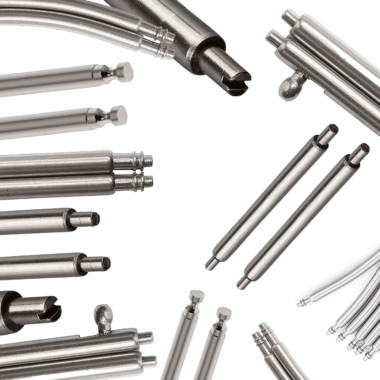
| Spring Bar Size | Measure the diameter and length of the spring bar (typically 1.5mm–2.0mm diameter) | Must fit the buckle’s spring bar holes |
| Total Length | Measure the overall length of the buckle from tip to hinge | Affects comfort and how the buckle sits on the wrist |
Common Buckle Widths
Buckle width typically tapers from the lug width. For example, a 20mm strap often has a 16mm or 18mm buckle-end.
| Lug Width | Common Buckle Width | Typical Use |
|---|---|---|
| 18mm | 14mm–16mm | Vintage dress watches |
| 20mm | 16mm–18mm | Most common modern size |
| 22mm | 18mm–20mm | Dive watches, sports watches |
| 24mm | 20mm–22mm | Oversized tool watches |
Common Buckle Materials
| Material / Coating | Characteristics | Durability | Price |
|---|---|---|---|
| Stainless Steel (Uncoated) | Corrosion-resistant, strong, classic silver finish | Excellent | Low–Moderate |
| PVD / IP (Physical Vapor Deposition / Ion Plating) |
Thin film coating for color (black, gold, rose gold, blue). Harder than standard paint but can wear over time. IP has enhanced adhesion. | Good | Moderate |
| DLC (Diamond-Like Carbon) |
Carbon-based coating with diamond-like hardness. Extremely scratch-resistant and wear-resistant. Provides a deep, matte black or anthracite finish. | Very High (Up to 20x harder than steel) | High |
| Gold Plated | Thin layer of gold over base metal (often brass or steel). | Low (Wears over time) | Low–Moderate |
| Solid Gold | Precious metal, luxurious, heavy. | Excellent | High |
| Titanium | Lightweight, hypoallergenic, strong, distinctive grey color. | Excellent | Moderate–High |
| Brass | Warm gold tone, develops patina, often plated. | Moderate | Low |
Common Finishes
- Polished: High-shine, reflective — dressy appearance.
- Brushed / Satin: Matte, fine linear texture — hides scratches better than polished [citation:7].
- Sandblasted / Bead-Blasted: Uniform matte texture — rugged, tool-watch aesthetic [citation:7].
- Mixed finish: Combination of polished and brushed surfaces — common on luxury sports watches.
Buckle Compatibility: Matching Buckle to Strap
Width Compatibility
The buckle width must match the strap’s buckle-end width. Most straps taper, so the buckle-end is narrower than the lug-end. Always measure the strap’s buckle-end width before ordering a replacement buckle.
Spring Bar Compatibility
Most buckles use standard spring bars (1.5mm or 1.8mm diameter). Ensure the spring bar length matches the buckle’s lug width. Quick-release spring bars are also available for tool-free buckle changes.
Strap Thickness
Some buckles are designed for specific strap thicknesses. A buckle with a very small gap may not accommodate a thick padded strap. If you’re using a thick leather strap, ensure the buckle’s internal clearance is sufficient.
Tang Buckle Compatibility
Tang buckles come in two common tongue types:
- Standard tongue: Fits most straps with standard hole spacing
- Flat tongue: Designed for thinner straps, reduces wear
Deployant Clasp Compatibility
Deployant clasps are often sold with straps designed specifically for them, but standard tang straps can sometimes be adapted — with two caveats:
- Hole side: The strap must physically fit into the deployant clasp’s locking mechanism or system. If the clasp grips the strap through the existing holes and the strap is too thick or the hole diameter or shape doesn’t fit, it will not work.
- Buckle side: When using a standard tang strap, the buckle side will have a small exposed hole where the original tang buckle pin sat. This is cosmetic and does not affect functionality.
If these conditions are acceptable, a standard tang strap can work with a deployant clasp. Measure carefully and test fit before committing.
As a general rule, if you’re switching from a tang buckle to a deployant clasp, you’ll likely need a new strap designed for the clasp.
How to Choose the Right Buckle
By Watch Style
| Watch Type | Recommended Buckle | Reason |
|---|---|---|
| Dress Watch | Polished tang buckle or butterfly deployant | Sleek, elegant appearance |
| Dive Watch | Brushed tang buckle, dive extension clasp on bracelet | Durable, functional |
| Field / Tool Watch | Brushed or sandblasted tang buckle | Rugged, military aesthetic |
| Vintage Watch | Simple tang buckle, often unsigned or with period-correct logo | Maintains vintage authenticity |
| Luxury / Sports | Deployant clasp with micro-adjustment | Convenience, security, premium feel |
By Material & Finish
- Match your watch case: Stainless steel buckle for stainless steel watches, gold buckle for gold watches
- Consider lifestyle: Active lifestyle → durable brushed finish; office/dress → polished finish
- Allergies: Titanium or stainless steel for nickel-sensitive individuals
By Convenience
- Tang buckle: Simple, universal, easy to replace
- Deployant clasp: Faster to put on/take off, less strap wear
- Quick-release spring bars: Tool-free buckle changes
Common Buckle Issues & Solutions
| Issue | Cause | Solution |
|---|---|---|
| Buckle tongue bent or broken | Impact, wear over time | Replace buckle (tongues are not usually replaceable separately) |
| Deployant clasp won’t close securely | Worn hinge, bent component, debris | Clean, inspect for damage, replace if worn |
| Strap holes wearing out | Normal wear, sharp tongue edges | Switch to deployant clasp, replace strap, file tongue edges smooth |
| Buckle finish worn or scratched | Daily wear, contact with surfaces | Replace buckle, or for brushed finishes, refinish with sanding pad |
| Spring bar failure | Worn or bent spring bar | Replace spring bar (standard 1.5mm or 1.8mm diameter) |
Buckle Maintenance & Care
- Clean regularly: Wipe with soft cloth. For deeper cleaning, use mild soap and water, then dry thoroughly.
- Avoid chemicals: Perfume, sunscreen, and chlorine can damage plated finishes.
- Check spring bars periodically: Ensure they are not bent or corroded.
- Store properly: Keep watch in a dry place; avoid storing with buckle under tension.
- For gold-plated buckles: Avoid abrasive cleaners; consider replacing when plating wears.
Frequently Asked Questions
How do I know what size buckle I need?
Measure the width of the strap at the buckle end. Common sizes are 14mm, 16mm, 18mm, and 20mm. If you’re replacing an existing buckle, measure the inner width between the buckle lugs.
Can I put a deployant clasp on any strap?
Not directly. Deployant clasps require straps with a specific length configuration. Standard tang-style straps have one long and one short side. Deployant straps usually have two short sides. You’ll likely need a new strap designed for the clasp.
Are all tang buckles interchangeable?
If the width matches and the spring bar fits, yes. However, buckle thickness and tongue shape vary. Some vintage watches require period-correct buckles for authenticity.
What’s the difference between a deployant clasp and a butterfly clasp?
A deployant clasp folds open from one side. A butterfly clasp opens symmetrically from both sides, creating a cleaner look when closed. Both serve the same purpose but have different appearances.
How do I prevent strap holes from wearing out?
Switch to a deployant clasp, which eliminates hole wear entirely. If staying with a tang buckle, ensure the tongue edges are smooth and not too sharp.
Can I replace just the buckle on my OEM strap?
Yes, if the buckle is attached with a spring bar. Simply remove the spring bar and replace the buckle. Some OEM straps have sewn-in buckles that cannot be replaced without damaging the strap.
What is a “signed” buckle?
A signed buckle has the watch brand’s logo engraved or embossed. These are common on OEM straps and can be important for collectors maintaining originality.
Conclusion
The buckle may be small, but it has a significant impact on comfort, security, and style. Whether you’re replacing a worn buckle, upgrading to a deployant clasp, or building a custom strap, understanding these details ensures a successful project.
Key takeaways:
- Measure width carefully — buckle width must match strap’s buckle-end width
- Choose the right type — tang for simplicity, deployant for convenience and reduced wear
- Match materials and finish — coordinate with your watch case for a cohesive look
- Inspect regularly — check spring bars and buckle condition for safety
Ready to Find Your Buckle?
Browse our collection of watch buckles and clasps in all common sizes and finishes.
Need help finding the right buckle for your strap? Contact us with your strap measurements — we’ll help you find the perfect match.
We stock buckles in all common sizes and finishes — stainless steel, gold, titanium, and more. Based in Switzerland, we source from trusted manufacturers.