The Essential Guide to Swiss Watch Crowns & Stems
Understanding the crown and stem of your watch is key to appreciating its function and ensuring its longevity. Often taken for granted, this small component is your primary point of interaction with the timepiece, responsible for setting the time, winding the movement, and, in many cases, ensuring its water resistance. This guide provides a practical, accurate overview of Swiss watch crowns and stems, focusing on their types, functions, and maintenance.
Table of Contents
- What Are a Watch Crown and Stem?
- Primary Functions of the Crown
- Types of Swiss Watch Crowns
- Materials and Construction
- Compatibility and Replacement
- Care and Maintenance
- Frequently Asked Questions (FAQ)
What Are a Watch Crown and Stem?
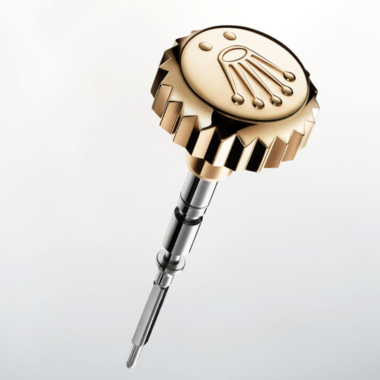
The watch crown is the knob on the side of the watch case. It is connected to the internal movement via a thin, threaded metal shaft called the stem. Together, they form a critical interface between you and the watch’s mechanics.
The stem screws into the winding mechanism inside the movement. When you pull the crown out to its various positions, you are physically moving the stem to engage different gears—for winding, setting the time, or adjusting other complications.
Primary Functions of the Crown
A crown typically operates in two or more positions:
- Position 0 (Screwed Down / Neutral): For water-resistant models, the crown is screwed tightly against the case, compressing a gasket to form a seal. In this position, the watch runs normally.
- Position 1 (Winding): The first pull (or the default state on non-screw-down crowns). Turning the crown in this position manually winds the mainspring of a mechanical movement.
- Position 2 (Time Setting): The second pull. Turning the crown in this position moves the hour and minute hands. For watches with a date function, there is often an intermediate position for quick-date setting.
Types of Swiss Watch Crowns
Crowns are designed for specific purposes and levels of water resistance.
- Standard Push-Pull Crown: The most common type on non-water-resistant or dress watches. You simply pull it out to its positions without unscrewing.
- Screw-Down Crown: A hallmark of dive and sports watches. The crown threads onto a tube on the case, creating a water-tight seal. It must be unscrewed counter-clockwise before use and firmly screwed back down afterwards.
- Oversized Crown: Often found on pilot or vintage-style watches, designed to be easily operated while wearing gloves.
- Cabochon Crown: A crown topped with a polished, often faceted gemstone like a sapphire, typical of dress watches from prestigious Swiss maisons.
- Protected Crown: Crowns that are integrated into or shielded by crown guards, which are extensions of the case, to prevent accidental impacts or unscrewing.
Materials and Construction
Swiss crowns are manufactured to exacting standards to ensure durability and a precise fit.
- Materials: Common materials include stainless steel (often 316L), titanium, gold (18k rose, yellow, or white), and platinum. The crown tube—the threaded receptacle on the case—is typically made of a matching or highly wear-resistant metal.
- Gaskets: Inside the crown and crown tube are rubber or polymer gaskets (often Viton®) that provide the crucial seal for water resistance. These are part of a watch’s broader sealing system.
- Stem Construction: The stem is a hardened steel component with specific threading and collar shapes that must match the exact calibre of the movement (e.g., an ETA 2824-2 or a Sellita SW200-1) for proper engagement.
Compatibility and Replacement
Replacing a crown and stem is a precise task. Incompatibility can damage the movement or compromise water resistance.
- Movement-Specific Stems: A stem is not universal. It must be manufactured for the specific Swiss movement calibre. A stem for a Unitas 6497 will not fit a Valjoux 7750.
- Crown Threading: The crown’s internal threading must perfectly match the stem’s external threading.
- Case Tube Threading: The crown’s external threading must perfectly match the crown tube on the watch case.
- Professional Service: Due to these precise requirements and the need for pressure testing after replacement, installing a new crown and stem should always be performed by a professional watchmaker.
Care and Maintenance
Proper care of your watch crown preserves function and water resistance.
- Always Screw Down Firmly: If your watch has a screw-down crown, ensure it is gently but firmly screwed all the way down after any adjustment. Do not force it.
- Avoid Adjusting Underwater: Never pull out or operate the crown when the watch is submerged or wet.
- Check Gaskets Regularly: As part of a standard service (recommended every 3-5 years), a watchmaker will inspect and replace the crown and case tube gaskets to maintain water resistance.
- Address Resistance Immediately: If the crown becomes hard to turn, screw, or pull, stop using it and consult a watchmaker. Forcing it can shear the stem.
Frequently Asked Questions (FAQ)
Can I replace any crown with a screw-down crown for better water resistance?
No. A screw-down crown requires a specific threaded case tube. Upgrading a watch not designed for one involves significant case modification and is not recommended. The watch’s water resistance is a system design, not just a crown feature.
My crown stem broke off inside the watch. What happens now?
This is a common repair. A watchmaker must open the case back, remove the movement, and extract the broken stem fragment from the winding pinion. They will then fit a new, compatible stem and crown. It is a standard procedure for a skilled technician.
Are crowns from different Swiss brands interchangeable?
Rarely. While some brands may share common movement calibres (e.g., ETA or Sellita), the crown’s threading, diameter, and design are usually unique to the brand’s specific case and tube design. Always seek a crown designed for your specific watch model.
What does “crown at 4 o’clock” mean?
This describes the position of the crown on the watch case. Most crowns are at 3 o’clock. A crown at 4 o’clock (like on some models from IWC or Panerai) can improve wrist comfort by preventing the crown from digging into the back of your hand.
How much does it typically cost to replace a crown and stem?
The cost varies significantly based on the brand, model, and whether the part is generic or an original manufacturer part. For a common Swiss movement with a generic steel crown, the repair may start in a modest range, but for a genuine branded crown from a luxury maker, the part cost alone can be considerably higher. Always request a quote from your watchmaker.