Swiss Watch Movements Guide
- • Swiss Watch Movements Guide
- • Introduction
- • A Note on the Scope of Swiss Movements
- • Swiss Movement Manufacturers Featured in Our Website
- • Common Swiss Movement Specifications
- • How to Identify Your Movement
- • Movement Compatibility: What Must Match
- • Swiss Movement Grades Explained
- • Frequently Asked Questions
- • Conclusion
Swiss Watch Movements: Identification, Compatibility & Key Calibers
Swiss movements are the gold standard in watchmaking. This guide helps you identify common Swiss calibers, understand compatibility (hand sizes, stem taps, dial feet), and find the right parts for your watch — whether you’re servicing a vintage piece or repairing a modern luxury timepiece.
📍 From Switzerland, with precision. We specialize in Swiss movements and compatible parts — including ETA, Sellita, Frederic Piguet, Chopard in-house, Tag Heuer in-house, and vintage column wheel calibers.
Introduction
Switzerland has been the heart of fine watchmaking for centuries. Swiss movements are prized for their precision, reliability, and craftsmanship. Whether you’re replacing a failed movement, upgrading a watch, or restoring a vintage piece, understanding calibers and compatibility is essential.
This guide focuses on Swiss mechanical movements — both automatic and manual wind. We do not cover quartz movements. The goal is to help you identify what you have, understand what parts fit, and know where to find help for rare or complex calibers.
A Note on the Scope of Swiss Movements
A complete guide to every Swiss movement would fill hundreds of pages. Hundreds of manufacturers — from large producers like ETA and Sellita to prestigious in-house calibers from Patek Philippe, Audemars Piguet, Chopard, and many others — have produced thousands of calibers over decades.
This guide covers the most commonly encountered in our website’s offer, along with examples of prestigious in-house calibers you may encounter. Your specific caliber is very probably not listed here, but you can use the identification methods below to research it, or contact us for assistance, and we’ll try to help.
Swiss Movement Manufacturers Featured in Our Website
ETA SA — The Industry Standard
ETA is the largest Swiss movement manufacturer, owned by the Swatch Group. Their calibers are found in everything from entry-level Swiss watches to high-end luxury brands like Tudor, Breitling, IWC, and many others. ETA movements are the benchmark for Swiss reliability and parts availability.
Sellita — The Independent Alternative
Sellita was originally an ETA assembler before becoming an independent manufacturer. Today, Sellita produces movements that are fully interchangeable with ETA calibers. Many brands have switched to Sellita as ETA reduced external sales. A Sellita SW200 is a direct replacement for an ETA 2824-2.
Frederic Piguet — High-End Specialist
Frederic Piguet (now Manufacture Blancpain) produced some of the finest ultra-thin and chronograph movements in Swiss history. Calibers like the FP 1185 (ultra-thin automatic chronograph) and FP 1150 (ultra-thin automatic with date) are found in high-end watches from Blancpain, Vacheron Constantin, Audemars Piguet, and others. These movements are prized for their finishing, complexity, and precision.
Chopard In-House — L.U.C Excellence
Chopard’s L.U.C line of in-house movements represents Swiss high watchmaking at its finest. Calibers like the 1.96 (ultra-thin automatic with micro-rotor) and 3.96 (automatic with date) feature exceptional finishing, twin barrels, and COSC certification. These movements are found in Chopard’s luxury collection and are highly regarded among collectors.
Tag Heuer In-House — Modern Integrated Chronographs
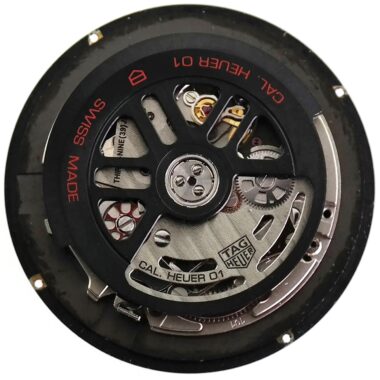
In recent years, Tag Heuer has developed its own in-house chronograph movements. The Caliber 1887, Heuer 01, and Heuer 02 (TH20-00) are integrated automatic chronographs with column wheel mechanisms. These are found in modern Carrera and Autavia models. For a detailed guide to Tag Heuer movements, see our separate Tag Heuer Movement Guide.
Other Notable Manufacturers
Other Swiss movement manufacturers you may encounter include: Lemania (famous for chronographs used in Omega Speedmaster), Venus (vintage column wheel chronographs), Valjoux (iconic chronograph calibers like the 7750 and vintage 72/23), Peseux (ultra-thin calibers), and others.
Common Swiss Movement Specifications
Below are the most commonly encountered calibers in watch repair and restoration. For calibers not listed here, use the identification methods below to find specifications, or contact us with your caliber number.
ETA Automatic Movements (Most Common)
| Caliber | Type | Hand Sizes (h/m/s) | Stem Tap | Diameter | Power Reserve |
|---|---|---|---|---|---|
| ETA 2824-2 | Automatic, date | 90 / 150 / 25 | 1.2mm | 25.6mm (11.5”’) | 38 hours |
| ETA 2836-2 | Automatic, day-date | 90 / 150 / 25 | 1.2mm | 25.6mm (11.5”’) | 38 hours |
| ETA 2892-2 | Automatic, date (thin) | 90 / 150 / 25 | 1.2mm | 25.6mm (11.5”’) | 42 hours |
| ETA 7750 (Valjoux) | Automatic chronograph | 90 / 150 / 25 | 1.2mm | 30.0mm (13.25”’) | 46 hours |
| ETA 6497-1 | Manual wind (large) | 120 / 180 / n/a | 1.2mm | 36.6mm (16.5”’) | 46 hours |
| ETA 6498-1 | Manual wind (large, seconds at 6) | 120 / 180 / n/a | 1.2mm | 36.6mm (16.5”’) | 46 hours |
Sellita Automatic Movements (ETA Alternatives)
| Caliber | Replaces | Hand Sizes (h/m/s) | Stem Tap | Power Reserve |
|---|---|---|---|---|
| Sellita SW200-1 | ETA 2824-2 | 90 / 150 / 25 | 1.2mm | 38 hours |
| Sellita SW220-1 | ETA 2836-2 | 90 / 150 / 25 | 1.2mm | 38 hours |
| Sellita SW300-1 | ETA 2892-2 | 90 / 150 / 25 | 1.2mm | 42 hours |
Frederic Piguet (High-End) — Notable Calibers
| Caliber | Type | Hand Sizes (h/m/s) | Stem Tap | Thickness |
|---|---|---|---|---|
| FP 1185 | Automatic chronograph (ultra-thin) | 90 / 150 / 25 | 1.2mm | 5.5mm |
| FP 1150 | Automatic, date (ultra-thin) | 90 / 150 / 25 | 1.2mm | 3.25mm |
Chopard In-House (L.U.C) — Notable Calibers
| Caliber | Type | Hand Sizes (h/m/s) | Stem Tap | Power Reserve |
|---|---|---|---|---|
| L.U.C 1.96 | Automatic, micro-rotor, COSC | Contact us | Contact us | 70 hours |
| L.U.C 3.96 | Automatic, date, COSC | Contact us | Contact us | 65 hours |
Note: For precise hand size and stem tap specifications on rare or in-house calibers like Frederic Piguet and Chopard L.U.C, contact us with your caliber number. These movements often have unique specifications not widely published.
How to Identify Your Movement
Step 1: Remove the Case Back
Use a proper case opener to avoid damaging the case or movement. For screw-back cases, a rubber ball or Jaxa wrench works well. For snap-back cases, use a case knife designed for the purpose.
Step 2: Locate the Caliber Markings
Swiss movements are typically clearly marked. Look for:
- ETA movements: Stamped under the balance wheel or on the rotor (e.g., “ETA 2824-2”)
- Sellita movements: Marked on the rotor or mainplate (e.g., “SW200-1”)
- Frederic Piguet: Marked on the mainplate (e.g., “FP 1185”)
- Chopard L.U.C: Marked on the rotor or mainplate (e.g., “L.U.C 1.96”)
- Tag Heuer in-house: Marked on the rotor (e.g., “Heuer 02”, “Caliber 1887”)
- “Swiss Made” stamp: Usually appears on the movement or rotor
Step 3: Research the Caliber
Once you have the caliber number, search for its technical specifications (hand sizes, stem tap, diameter, height). If you cannot find specifications, contact us with the caliber number — we may have the information or can source compatible parts.
Movement Compatibility: What Must Match
| Component | What to Check | Why It Matters |
|---|---|---|
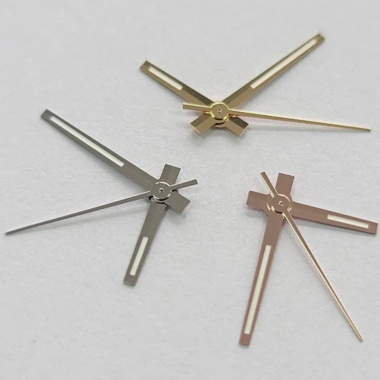
| Hand sizes | Hour, minute, seconds post diameters | Wrong sizes won’t fit or will be loose |
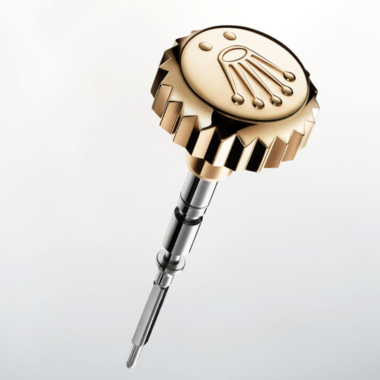
| Stem tap size | Thread size (typically 1.2mm for Swiss mechanical) | Crown won’t screw on |
| Dial feet position | Where dial feet attach to movement | Dial won’t align |
| Movement diameter | Overall size (e.g., 11.5”’ for ETA 2824) | May not fit case |
| Movement height | Total thickness | Case back may not close |
Swiss Movement Grades Explained
Swiss automatic movements are available in different grades. Understanding these helps you choose the right quality level for your project.
| Grade | Accuracy | Finishing | Best For |
|---|---|---|---|
| Standard | ±20 sec/day | Basic | Entry-level, daily wear |
| Elaboré | ±15 sec/day | Improved, some decoration | Mid-range watches |
| Top | ±10 sec/day | High-grade finishing, perlage | Higher-end Swiss watches |
| Chronometer (COSC) | ±4 sec/day | Highest finishing, certified | Luxury, collector watches |
Frequently Asked Questions
How do I know what movement my watch has?
Remove the case back and look for markings on the movement. The caliber number is usually stamped on the mainplate or rotor. For watches with solid case backs, you may need a watchmaker to open it.
What’s the difference between ETA and Sellita?
Sellita movements are designed as direct replacements for ETA calibers. SW200 replaces 2824-2, SW220 replaces 2836-2, etc. They are fully interchangeable in terms of dimensions, hand sizes, and stem taps.
Are Frederic Piguet movements interchangeable with ETA?
No. Frederic Piguet calibers are high-end, often ultra-thin movements with unique specifications. Parts are not interchangeable with ETA. Contact us with your FP caliber number for compatibility information.
Can I upgrade from a standard grade to a top grade movement?
Yes, if the caliber is the same (e.g., ETA 2824-2 Standard → Top). No case modifications are needed. Hand sizes and stem taps are identical across grades.
Where can I find parts for rare or vintage Swiss movements?
We specialize in sourcing parts for rare Swiss movements, including vintage column wheel chronographs (Valjoux, Venus, Lemania), Frederic Piguet, Chopard in-house, and other hard-to-find calibers. Contact us with your caliber number and part needs.
What is a column wheel chronograph movement?
A column wheel is a traditional chronograph control mechanism found in high-end and vintage chronographs (e.g., Valjoux 72, FP 1185, many modern in-house calibers). It is considered superior to cam-operated systems (like ETA 7750) for its precise, smooth action and historical significance.
Conclusion
Swiss movements represent the pinnacle of watchmaking precision and reliability. Whether you’re working with a common ETA caliber, a Sellita alternative, a prestigious Frederic Piguet, or a rare vintage column wheel chronograph, understanding identification and compatibility is essential.
Key takeaways:
- Know your caliber — it’s the foundation of compatibility
- Match hand sizes and stem taps — critical for a successful swap
- Choose the right grade — based on your accuracy needs and budget
- For rare movements, contact us — we specialize in hard-to-find calibers and parts
We specialize in Swiss mechanical movements — including ETA, Sellita, Frederic Piguet, Chopard in-house, and vintage column wheel calibers. Based in Switzerland, we source from trusted suppliers.