- • Introduction
- • Types of Watch Crystals
- • How to Identify Your Crystal Type
- • Crystal Shapes and Profiles
- • How to Measure a Watch Crystal
- • Crystal Installation Methods
- • Crystal Replacement Step by Step
- • Acrylic Crystal Polishing
- • Water Resistance After Crystal Replacement
- • Frequently Asked Questions
- • Conclusion
- • Ready to Find Your Crystal?
Watch Crystals: Types, Materials, Measurement & Replacement
The crystal is your watch’s first line of defense — protecting the dial while allowing you to read the time. Whether you’re replacing a cracked crystal, upgrading to sapphire, or restoring a vintage piece, this guide covers everything you need to know about watch crystals.
🔍 Replacing a watch crystal? We carry a selection of watch crystals — acrylic, mineral, and sapphire — in common sizes. Based in Switzerland, we source from trusted manufacturers.
Introduction
The watch crystal is the transparent cover that protects the dial and hands. It is one of the most commonly replaced components due to scratches, cracks, or fogging. Choosing the right crystal affects durability, clarity, and the overall appearance of your watch.
In this guide, you’ll learn:
- The three main types of watch crystals (acrylic, mineral, sapphire)
- How to identify which crystal your watch has
- How to measure a crystal correctly
- Crystal shapes and profiles
- Installation methods and tools needed
- How crystal replacement affects water resistance
Types of Watch Crystals
There are three primary types of watch crystals, each with different characteristics in terms of durability, scratch resistance, and cost.
Comparison Overview
| Type | Scratch Resistance | Impact Resistance | Clarity | Cost | Common In |
|---|---|---|---|---|---|
| Acrylic | Low,none | High (flexible),none | Good,none | Low,none | Vintage watches, affordable watches,none |
| Mineral | Medium,none | Medium,none | Very good,none | Low–Medium,none | Most modern watches (entry to mid-range),none |
| Sapphire | Excellent (only diamond scratches it),none | Good (can shatter),none | Excellent,none | High,none | Luxury and mid-range Swiss watches,none |
Acrylic Crystals
Acrylic (also called Plexiglass or Hesalite) is a type of plastic. It was the standard for watch crystals before the 1980s and is still used today, most famously in the Omega Speedmaster Moonwatch.
- Pros: Highly impact-resistant, can be polished to remove scratches, affordable
- Cons: Scratches easily, can crack under extreme cold
- Best for: Vintage watches, tool watches where impact resistance is prioritized over scratch resistance
Mineral Crystals
Mineral glass is hardened glass that offers better scratch resistance than acrylic. It is the most common crystal type in modern watches.
- Pros: Good scratch resistance, affordable, good clarity
- Cons: Cannot be polished, can shatter on hard impact
- Best for: Everyday watches, entry to mid-range timepieces
Sapphire Crystals
Sapphire crystal is synthetic corundum — the same material as ruby. It is the most scratch-resistant material used in watchmaking (only diamonds can scratch it).
- Pros: Virtually scratch-proof, excellent clarity, premium appearance
- Cons: Expensive, can shatter on extreme impact, requires special tools to cut
- Best for: Luxury watches, high-end tool watches, anyone who wants maximum durability
How to Identify Your Crystal Type
| Test | Acrylic | Mineral | Sapphire |
|---|---|---|---|
| Tap with fingernail | Dull, plastic sound,none | Sharp, glass sound,none | Very sharp, high-pitched,none |
| Water drop test | Water spreads,none | Water beads slightly,none | Water beads tightly,none |
Note: The water drop test is simple: place a small drop of water on the crystal. If it spreads, it’s likely acrylic. If it beads up, it’s glass (mineral or sapphire). Sapphire beads more tightly than mineral.
Crystal Shapes and Profiles
| Profile | Description | Typical Use |
|---|---|---|
| Flat | Completely flat surface, sits flush with bezel,none | Dress watches, modern sports watches,none |
| Domed / Curved | Curved outward, creates magnifying effect,none | Vintage watches, dive watches,none |
| Double-Domed | Curved on both outer and inner surfaces,none | Sports watches, high-end divers,none |
| Box / Tension Ring | Flat with raised edges, held by tension ring,none | Vintage watches (1960s–1970s),none |
| Cyclops / Magnifier | Small magnifying lens over date window,none | Rolex, Tudor, many date watches,none |
How to Measure a Watch Crystal
Accurate measurement is critical. A crystal that’s too large won’t fit; one that’s too small will leak or fall out. Use digital calipers for precision.
| Measurement | How to Measure | Why It Matters |
|---|---|---|
| Diameter | Measure across the widest point,none | Must match case opening; common: 28.0mm, 30.0mm, 32.0mm, 34.0mm, 36.0mm,none |
| Thickness | Measure from top to bottom edge,none | Affects fit and water resistance,none |
| Profile | Observe shape (flat, domed, etc.),none | Must match case profile,none |
Measuring Tips by Crystal Type
- For tension-ring crystals: Measure the crystal itself, not the ring. The ring is part of the crystal assembly.
- For glued crystals: Measure the case opening, not the old crystal (which may have been incorrectly sized).
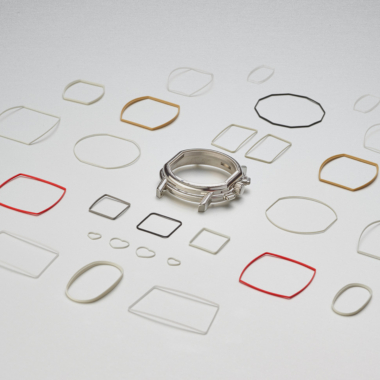
- For gasket-sealed crystals: Measure both the crystal and the case opening. The gasket creates the seal.
Crystal Installation Methods
1. Tension-Ring (Friction Fit)
Common on acrylic and some mineral crystals. The crystal is pressed into the case using a crystal press. The tension ring creates friction that holds it in place.
- Tools needed: Crystal press with appropriate dies
- Difficulty: Moderate
2. Glued / Adhesive Fit
Common on mineral and sapphire crystals. UV-cured adhesive or special crystal cement holds the crystal in place.
- Tools needed: UV curing light (for UV glue), crystal cement
- Difficulty: Moderate (requires clean surface, proper adhesive)
3. Gasket-Sealed (Compression Fit)
A rubber gasket sits between the crystal and case. The crystal is pressed in, compressing the gasket to create a watertight seal.
- Tools needed: Crystal press, gasket lubricant
- Difficulty: Moderate
4. Screw-Down (Retaining Ring)
Some high-end watches use a screw-down retaining ring that holds the crystal in place. This is common on certain dive watches.
- Tools needed: Specialized case wrench
- Difficulty: Advanced
Crystal Replacement Step by Step
Step 1: Remove the Old Crystal
- Tension-ring crystals: Use a crystal press to push out from inside the case
- Glued crystals: Carefully pry out with a case knife (protect the case)
- Damaged crystals: Cover with tape to prevent shards from scattering
Step 2: Clean the Case
Remove all old adhesive, gasket residue, and debris. The case must be perfectly clean for a proper seal.
Step 3: Install New Gasket (if applicable)
If the case uses a gasket, install it in the groove. Apply a thin layer of silicone grease to lubricate and improve sealing.
Step 4: Press the New Crystal
- Select the correct die size (slightly smaller than crystal diameter)
- Place crystal in case (or on gasket)
- Use crystal press to apply even, steady pressure
- Press until crystal is fully seated
Step 5: Verify Fit
- Check that crystal is flush with bezel (unless domed)
- Ensure no gaps or uneven seating
- Test water resistance (if applicable)
Acrylic Crystal Polishing
One advantage of acrylic crystals is that scratches can be polished out. This is a cost-effective alternative to replacement.
Polishing Method
- Remove the crystal from the case (or protect the case with tape)
- Use a progressive polishing system (e.g., PolyWatch or Novus)
- Apply compound and rub in circular motions
- Buff with a soft cloth
- Repeat for deeper scratches
Note: Mineral and sapphire crystals cannot be polished. Scratches on these require replacement.
Water Resistance After Crystal Replacement
Crystal replacement affects water resistance. Any time the crystal is removed and reinstalled, the water resistance should be tested.
- If water resistance matters: Have the watch pressure tested after crystal replacement
- If original was water-resistant: Always replace the gasket and lubricate
- If original was not water-resistant: No special considerations needed
Important: Even if the watch was water-resistant before, a crystal replacement without proper gasket replacement and testing may compromise water resistance.
Frequently Asked Questions
Can I upgrade from mineral to sapphire?
Yes, if the dimensions (diameter and thickness) match exactly. Many aftermarket sapphire crystals are available as direct replacements for common mineral crystal sizes. Check both diameter and thickness before ordering.
How do I know what size crystal I need?
Measure the case opening or the old crystal with digital calipers. For tension-ring crystals, measure the crystal itself. For glued crystals, measure the case opening. Common sizes are measured in millimeters (e.g., 30.5mm, 32.0mm).
What’s the most durable crystal material?
Sapphire is the most scratch-resistant. However, it can shatter on extreme impact. Acrylic is the most impact-resistant. For most daily wear, sapphire with a good case design offers the best balance.
Can I install a crystal myself?
Yes, with the right tools (crystal press, calipers) and careful measurement. Acrylic crystals are easiest for beginners. Sapphire and mineral require more precision and the correct adhesive or press technique.
How do I prevent fogging under the crystal?
Fogging indicates moisture inside the case. This can happen after crystal replacement if the case wasn’t completely dry, or if water resistance was compromised. If fogging persists, the watch needs to be opened, dried, and resealed properly.
What is a “cyclops” crystal?
A cyclops is a magnifying lens integrated into the crystal, positioned over the date window. It magnifies the date for easier reading. Cyclops crystals are more expensive and require precise alignment during installation.
How often should crystals be replaced?
Only when damaged (cracked, deeply scratched) or if water resistance is compromised. Acrylic crystals can be polished many times before needing replacement. Mineral and sapphire typically last the life of the watch unless damaged.
Conclusion
The watch crystal is a critical component that protects your watch while defining its appearance. Understanding the differences between acrylic, mineral, and sapphire — and knowing how to measure and replace them — empowers you to make informed decisions for repairs, restorations, and custom builds.
Key takeaways:
- Choose the right material — acrylic for impact resistance and polishability, mineral for everyday value, sapphire for maximum scratch resistance
- Measure precisely — diameter, thickness, and profile must match your case
- Use proper tools — a crystal press is essential for most installations
- Test water resistance — after any crystal replacement, verify seals are intact
Ready to Find Your Crystal?
Browse our collection of watch crystals in all standard sizes and materials.
Need help finding the right crystal for your watch? Contact us with your case measurements — we’ll help you find the perfect match.
We stock watch crystals for Swiss watches, including ETA-based cases and vintage restorations. Based in Switzerland, we source from trusted manufacturers.