Watch Cases: Types, Materials, Measurements & Compatibility
The watch case is the foundation of any timepiece — it houses the movement, protects the dial, and defines the watch’s character and durability. Whether you’re building a custom watch, replacing a damaged case, or restoring a vintage piece, this guide covers everything you need to know about watch cases.
🔧 Building or restoring a watch? We carry a selection of watch cases — from classic dress cases to rugged dive cases. Available in stainless steel, titanium, and coated finishes (PVD, DLC). Based in Switzerland, we source from trusted manufacturers.
Introduction
The watch case is more than just a housing — it’s the structural backbone of your timepiece. It determines water resistance, durability, style, and even how the watch feels on the wrist. Whether you’re building a custom watch, replacing a damaged case, or restoring a vintage piece, understanding case specifications is essential.
In this guide, you’ll learn:
- The components of a watch case
- Different case shapes and styles
- Case materials and their characteristics
- How to measure a watch case correctly
- Case compatibility with movements and dials
- Water resistance ratings and what they mean
- Case construction types (monobloc, three-piece, etc.)
Case Components
| Component | Description | Function |
|---|---|---|
| Case Body / Middle | The main housing that contains the movement | Provides structural integrity and houses movement |
| Bezel | The ring that surrounds the crystal | Secures crystal, can be decorative or functional (dive bezel) |
| Case Back | The rear cover that seals the case | Protects movement, can be screw-down or snap-back |
| Lugs | The protruding extensions where the strap attaches | Determine strap width and fit on wrist — see Attachments Guide |
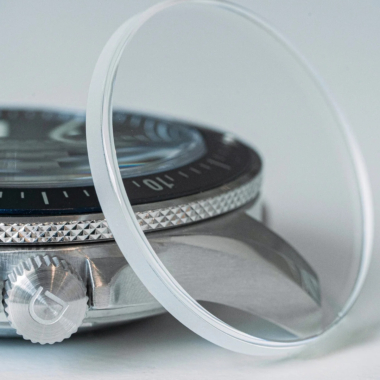
| Crystal | The transparent cover over the dial | Protects dial, allows viewing |
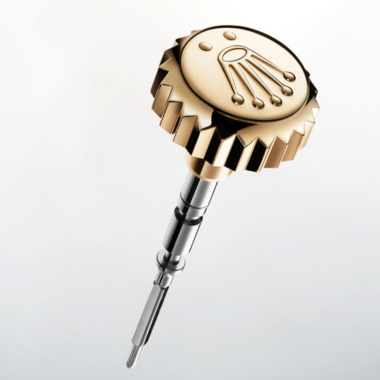
| Crown | The knob used to set time and wind the watch | Controls movement functions |
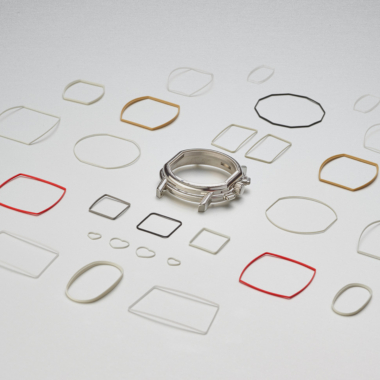
| Gaskets / Seals | Rubber or silicone rings that seal the case | Provide water resistance — see Gaskets Guide |
| Movement Ring / Spacer | Plastic or metal ring that holds the movement in place | Secures movement within case |
Case Shapes
| Shape | Description | Best For |
|---|---|---|
| Round | The most classic and common shape,none | All watch types — dress, sports, dive,none |
| Cushion | Square with rounded corners, vintage-inspired,none | Sports watches, vintage styles,none |
| Tonneau | Barrel-shaped, curved sides,none | Dress watches, Art Deco styles,none |
| Square | Clean lines, geometric,none | Dress watches, modern styles,none |
| Rectangular | Elongated rectangle, elegant,none | Dress watches (Cartier Tank style),none |
| Octagonal | Eight-sided, distinctive,none | Sports luxury (Royal Oak style),none |
| Oval | Elliptical, elegant,none | Dress watches, women’s watches,none |
Case Materials
Common Materials
| Material | Characteristics | Durability | Weight | Price |
|---|---|---|---|---|
| Stainless Steel (316L) | Corrosion-resistant, hypoallergenic, classic,none | Excellent,none | Medium,none | Low–Moderate,none |
| Stainless Steel (904L) | Higher corrosion resistance, used by Rolex,none | Superior,none | Medium,none | Moderate–High,none |
| Titanium | Lightweight, hypoallergenic, strong,none | Excellent,none | Light,none | Moderate–High,none |
| Bronze | Warm tone, develops patina over time,none | Good,none | Heavy,none | Moderate,none |
| Gold (18k, 14k) | Precious metal, luxurious, heavy,none | Excellent,none | Heavy,none | High,none |
| Gold Plated / Filled | Base metal with gold layer, affordable luxury look,none | Moderate (plating wears),none | Medium,none | Low–Moderate,none |
| Ceramic | Scratch-resistant, lightweight, modern,none | Excellent (scratch-resistant, brittle),none | Light,none | High,none |
| Carbon Fiber | Ultra-lightweight, high-tech appearance,none | Excellent,none | Very Light,none | High,none |
Coatings (PVD, DLC, IP)
| Coating | Characteristics | Durability | Common Colors |
|---|---|---|---|
| PVD / IP (Physical Vapor Deposition / Ion Plating) |
Thin film coating for color. Harder than paint but can wear over time. IP has enhanced adhesion. | Good,none | Black, gold, rose gold, blue,none |
| DLC (Diamond-Like Carbon) |
Carbon-based coating with diamond-like hardness. Extremely scratch-resistant and wear-resistant. Provides a deep, matte black or anthracite finish. Up to 20x harder than steel. | Very High,none | Black, dark grey,none |
Finishes
- Polished: High-shine, dressy, shows scratches more easily
- Brushed / Satin: Matte, hides scratches, tool-watch aesthetic
- Sandblasted: Uniform matte texture, military/tactical look
- Mixed Finish: Combination of polished and brushed (common on luxury sports watches)
- Bead-Blasted: Fine matte texture, hides scratches well
How to Measure a Watch Case
Accurate measurement is critical when replacing a case or building a custom watch. Use digital calipers for precision.
| Measurement | How to Measure | Why It Matters |
|---|---|---|
| Case Diameter | Measure across the case (excluding crown),none | Determines overall size; common: 36mm, 38mm, 40mm, 42mm, 44mm,none |
| Case Thickness / Height | Measure from crystal top to case back,none | Affects comfort and fit under shirt cuffs,none |
| Lug-to-Lug Length | Measure from tip of top lug to tip of bottom lug,none | Critical for wrist fit — determines if watch overhangs,none |
| Lug Width | Measure between the lugs (inner width),none | Determines strap size — see Attachments Guide,none |
| Movement Diameter | Measure the case opening for movement,none | Must match movement size (e.g., 11.5”’, 13”’),none |
| Crystal Diameter | Measure the bezel opening for crystal,none | Must match crystal size,none |
Case Construction Types
Three-Piece Case
The most common construction: case middle, bezel, and case back. Allows for easy movement installation and service.
- Pros: Easy to service, versatile, widely available
- Cons: More potential leak points (more gaskets)
Monobloc Case (One-Piece)
The case is machined from a single piece of metal. The movement is installed from the front (through the crystal).
- Pros: Excellent water resistance, clean appearance
- Cons: More difficult to service, requires crystal removal
Two-Piece Case
A simplified construction with case middle and case back. Often used in lower-cost watches.
Screw-Down vs. Snap-Back Case Backs
| Type | Description | Water Resistance | Tools Needed |
|---|---|---|---|
| Screw-Down | Threaded case back that screws into case middle,none | Excellent (50m–300m+),none | Case wrench, rubber ball,none |
| Snap-Back | Press-fit case back with tension,none | Moderate (30m–50m),none | Case knife, press tool,none |
Case Compatibility: What Must Match
| Component | What to Check | Why It Matters |
|---|---|---|
| Movement Diameter | Case opening must match movement size,none | Movement won’t fit if too large or too small,none |
| Movement Height | Case must have enough depth for movement and hands,none | Hands may hit crystal or case back,none |
| Crown Position | Case crown tube position must match movement’s stem,none | Stem won’t align with crown,none |
| Dial Diameter | Dial must fit within case opening,none | Dial won’t fit or will be loose,none |
| Crystal Size | Must match bezel opening,none | Crystal won’t fit or seal properly,none |
Water Resistance Ratings
Understanding water resistance is critical for choosing the right case for your needs.
| Rating | Suitable For | Limitations |
|---|---|---|
| 30m / 3 ATM | Splash resistant, rain,none | No swimming or showering,none |
| 50m / 5 ATM | Shallow swimming, showering,none | No diving or high-velocity water,none |
| 100m / 10 ATM | Swimming, snorkeling,none | No scuba diving,none |
| 200m / 20 ATM | Scuba diving,none | Suitable for professional diving,none |
Important: Water resistance is not permanent. Gaskets degrade over time and need replacement during service.
Frequently Asked Questions
What case size should I choose?
Case size is a personal preference, but general guidelines: small wrists (under 6.5″) typically suit 36mm–38mm; medium wrists (6.5″–7.5″) suit 38mm–42mm; larger wrists (over 7.5″) suit 42mm–46mm. The lug-to-lug measurement is equally important — the watch should not overhang your wrist.
Can I swap a movement into any case?
No. The movement must match the case’s movement diameter, height, and crown position. Use a movement ring/spacer to center the movement if the case is designed for a slightly larger movement.
What’s the difference between 316L and 904L stainless steel?
904L stainless steel (used by Rolex) has higher nickel and chromium content, making it more corrosion-resistant and taking a higher polish. 316L is the industry standard, used by most brands, and is perfectly adequate for everyday wear.
How do I know if a case will fit my wrist?
Lug-to-lug measurement is more important than case diameter. A 42mm case with a 48mm lug-to-lug fits differently than a 42mm case with a 52mm lug-to-lug. For a comfortable fit, the lug-to-lug should be smaller than your wrist width.
What is a movement ring / spacer?
A movement ring (often plastic or metal) fills the gap between the movement and the case. It centers the movement and prevents it from shifting. If you’re swapping movements, you may need a new ring designed for that movement diameter.
Can I replace a snap-back case back with a screw-down?
Only if the case middle is threaded for a screw-down back. Most cases are designed for one type only. You cannot convert a snap-back case to screw-down without machining.
What is DLC coating and how does it compare to PVD?
DLC (Diamond-Like Carbon) is a carbon-based coating that is significantly harder and more scratch-resistant than standard PVD. It provides a deep, matte black finish and is used on high-end tool watches. PVD is thinner and less durable but available in more colors.
Conclusion
The watch case is the foundation of any timepiece. Choosing the right case affects durability, water resistance, comfort, and style. Whether you’re building a custom watch, replacing a damaged case, or simply understanding your watch better, these specifications are essential knowledge.
Key takeaways:
- Measure carefully — diameter, lug width, lug-to-lug, and movement fit
- Match movement compatibility — diameter, height, crown position
- Choose material based on lifestyle — steel for durability, titanium for lightness, DLC/PVD for coatings
- Water resistance requires maintenance — gaskets degrade over time
Ready to Find Your Case?
Browse our selection of watch cases in various materials and sizes.
Need help finding the right case for your movement? Contact us with your movement caliber and case measurements — we’ll help you find the perfect match.
We specialize in cases for Swiss mechanical movements — ETA, Sellita, and in-house calibers. Based in Switzerland, we source from trusted manufacturers.